
TREATING YOUR FLOUR RIGHT
Flour is an incredible staple and kitchen helper, so reward your star ingredient with star treatment.
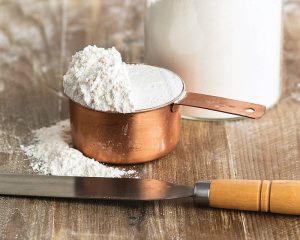
Measuring
How you measure flour matters a lot more than you might realize. Never directly scoop flour with your measuring cup—this compacts the flour into the cup, and you’ll end up with too much. Instead, loosely spoon flour into a dry measuring cup, slightly overfilling it, and then scrape a straight edge across the top of the cup to remove the excess. This assures you have the correct amount of flour for your recipe.
Substitutions
1 CUP CAKE FLOUR —Measure 1 cup all-purpose flour, then remove 2 tablespoons of it. Add 2 tablespoons cornstarch, and then sift them together.
1 CUP BREAD FLOUR—Measure 1 cup all-purpose flour. Note, your baked good might have slightly less chew.
1 CUP SELF-RISING FLOUR—Sift together 1 cup all-purpose flour, 1½ teaspoons baking powder, and ¼ teaspoon salt.
Storage
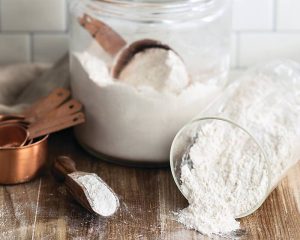
For maximum shelf life, store specialty—such as rye, spelt, or sprouted—and whole-grain flours in the refrigerator or freezer in an airtight container or resealable plastic freezer bag, not the paper bag it comes in. Because these flours contain oils, they’re more likely to become rancid when stored at room temperature. White flours, such as all-purpose, bread, and self-rising, are fine stored in an airtight container in a cool, dry spot in a cabinet.
To find more recipes and ingredient spotlights from our September/October 2022, visit southerncastiron.com to order your issue today or check available newsstands now!